
CHICAGO 🇺🇸: The Map and The Freight [Episode 9.0]
Show notes and track listing from Episode 9.0.
CORNERSTONE EPISODES
2/28/202624 min read
Chicago doesn’t ask for acceptance. It claims first.
I learned that through family stories—my 86-year-old grandmother stranded on freight tracks who treated panic like a rookie mistake, and a dad who explained the city like a solvable system: eight blocks to a mile, numbers you can trust, and a grid that tells you exactly where you are.
But this episode is about what the grid can’t tell you: the other lines—rails, codes, favors, silence—and what happens when you try to “claim” a place you’ve only ever visited. It’s a story about maps and territory, swagger and cost, and the moment you realize the difference between knowing where you are… and knowing what you’re doing there.
THANK YOU
Dad, Freda, Kristen, Michael, Matthew, Mimmy, Reub, Tanya, Tom and the cool r/chicago folks who gave me insights and voices of Chicago.
And of course the artists below who make Chicago an incredible music city (one of my very favorites of this journey so far).
TRACK LIST (in order)
Jesus, Etc. - Wilco
This Too Shall Pass - OK Go
The Show Goes On - Lupe Fiasco
Mannish Boy - Muddy Waters
Chicago - Sufjan Stevens
Lucid Dreams - Juice WRLD
Mr. Roboto - Styx
Overnight Celebrity - Twista (ft. Miri-Ben Ari & Kanye West)
The Super Bowl Shuffle - Chicago Bears Shufflin' Crew
Centuries - Fall Out Boy
Resurrection - Common (Sense)
Born in Chicago - The Paul Butterfield Blues Band
Saturday in the Park - Chicago
Good Life - Kanye West (ft. T-Pain)
Kills - Chief Keef
All My Life - Lil Durk (ft. J. Cole)
PTSD - G Herbo (ft. Juice WRLD, Chance the Rapper & Lil Uzi Vert)
Angels - Chance the Rapper (ft. Saba)
Pulaski at Night - Andrew Bird
Sing, Sing, Sing - Benny Goodman
Best of My Love - The Emotions
Give It 2 You - Da Brat
Hay - Crucial Conflict
All the Way (Live in Chicago) - Eddie Vedder
Go Cubs Go - Steve Goodman
Bear Down, Chicago Bears - The Polar Bear Singers
1979 - Smashing Pumpkins
Home - Kanye West
Chelsea Dagger - The Fratellis
Sweet Home Chicago - The Blues Brothers
Sirius (Chicago Bulls Intro) - The Alan Parsons Project
Chicago Town Polka - Eddie Blazonczyk
Let's Groove - Earth, Wind & Fire
Reminding Me (Of Sef) - Common (ft. Chantay Savage)
(Full transcript below photos)
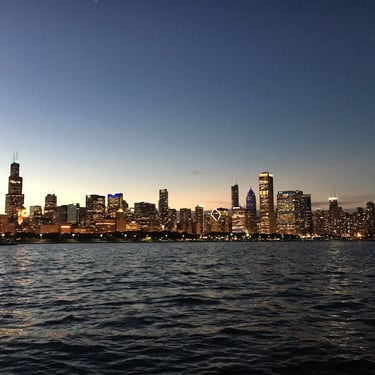
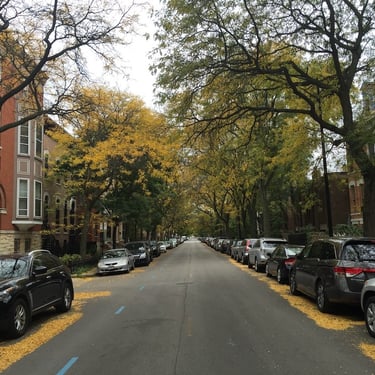

(Scene from "The Untouchables")
"I grew up in a tough neighborhood. And we used to say 'you can get further with a kind word and a gun than you can with just a kind word.' There is violence in Chicago, of course, but not by me and not by anybody I employ, and I'll tell you why, because it's not good business."
***
My grandmother was 86, struggling around on a walker—the kind with split open tennis balls on the bottom—and she was still driving. Not because she should, but because she could.
One day she’s out on her usual circuit—Weber’s Bakery on Archer Avenue, the Polish deli a bit further down, and the Jewel/Osco nearby. She gets her things and decides to drive around for a while, with years of my dad’s pestering in her head about how short trips are the worst thing you can do to a car—especially an old blue Cadillac Brougham that gets used once, maybe twice a week, in often freezing temperatures.
She’s heading west on 63rd street toward her home in Summit when that Cadillac stalls out. Right on the BRC train tracks—tracks that handle about 50 freight trains a day from the Bedford Park railyard nearby.
The good news is that it’s a connector track, and nothing really moves too fast on it. The bad news is: before long, a freight train will be coming.
But this is my grandmother. She’s been through worse, and she sure as hell isn’t going to panic now. So she hops out—walker first—hobbles to the back of the car, and makes a pushing motion. The car isn’t going anywhere, but her initiative is the play.
A minute or two later, just as a locomotive whistle blows around the curve, a trucker pulls off, hops out, and is able to push the Cadillac clear of the tracks. He calls a tow truck and is even kind enough to wait with her.
Fifteen minutes later, the car is at the local mechanic shop—the same one grandma had been going to for all those years–-and she is back in her recliner at home, just in time for the first pitch of the White Sox season opener. By the next Weber’s-Jewel/Osco run, she’s behind the wheel of that old blue Cadillac again, like nothing happened.
My Grandmother understood how Chicago moves—rails, traffic, shortcuts, timing. She’d been navigating it for 80+ years.
***
This is EveryCity Whispers, a show about the quiet messages cities send us, and how they shape who we become. I’m Steven. Today, we’re in Chicago.
This series so far has been about the cities I chose to live in–Tokyo, New York, São Paulo and the rest. But this is part two of me going back to the roots: the cities that shaped me indirectly, through family ties.
Like Boston, this is one of the cities that raised me from a distance—through family, summers, and stories—without ever being my address. It’s where my dad is from, and the place I’ve always claimed as a second home. In reality, I’d only spend a week or two here each summer.
When my Dad would tell me about Chicago during the other fifty weeks a year, he’d do it the way he explains everything: like a system—inputs and outputs—numbers, right angles, and rules you could learn. You could understand the whole place if you understood how it was built.
When I was a kid, Chicago seemed simple–-like a city that came with instructions you could memorize.
And then I got old enough to want the part you can’t.
Because the first lesson Chicago ever taught me wasn’t about neighborhoods or history.
It was about rails.
And once you notice rails, you start noticing the other lines too—steel, numbers, codes.
Some lines in Chicago are loud—you can hear them coming around the curve. Some are mapped—clean enough to learn by heart. Some run through favors and silence—you don’t see them anywhere because nobody wants them written down. And some only show up when you step off the train and try to act like you belong.
My dad lived inside those lines without naming them. I went looking for them as a teenager–-and found out what visiting really feels like.
This is a story about the map… and everything it leaves out.
***
"I guess what I didn't realize until I lived around the world and coastal cities in the U.S. and in London is that other cities are more glamorous and have a lot more hype associated with them. But I kind of noticed that people in big cities like that have a bit of self-importance and take things very seriously. I didn't realize until I was abroad and would go back and hang out with other Chicagoans that people take themselves less seriously, and are more pragmatic and level-headed in a way. It kind of makes them less douchey, if that makes sense. Like, people tend to be funny because they don't take themselves seriously. They know how to laugh at themselves, they know how to poke fun at others, and no one gets offended."
"I've lived in Chicago for over 15 years, and thinking back to when I first moved here, people immediately knew I wasn't from here originally. That's not a good or a bad thing, but one of the first things you're going to hear or questions you're going to ask is, "So what high school did you go to?" I thought that was pretty interesting because I didn't know why they were asking that initially. It really helps set the tone about where are you really from in the city? A lot of people say they are from Chicago or they live in Chicago, but they are from the suburbs or they are from the Chicagoland area. Just knowing what high school you went to really sets you apart. It is like, "OK this is the type of school you went to. This is the neighborhood. Did you commute to get there? Did you apply to get into that school? Did you go to your home school?" It gives people kind of a baseline of what to expect from you. For me that was so weird, so so weird, because it was like, 'You're pre-judging people.' It didn't really come from a negative place, but it's like, 'you're pre-judging people.'"
"Look, proper cities are built on a grid and have 24 hour trains."
***
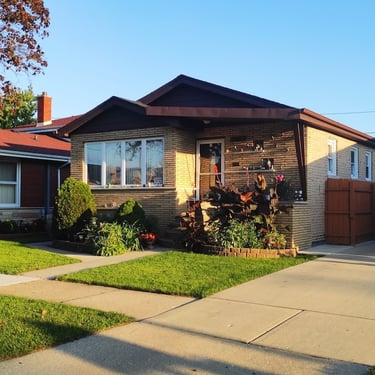
My Dad was born in a neighborhood called Argo, on the South Side—technically Summit, Illinois, on this side of Harlem Avenue. Chicago proper across the street.
It was working class and mixed. A lot of the neighborhood worked at the Argo Corn Products plant, where the smell of corn syrup hung in the air on still days—sweet and heavy, like it didn’t know where else to go. Shift changes moved like tides. My grandfather worked at the Reynolds Metals plant across the river.
Argo was Polish kids, Black kids, Italian kids. They each had their little pockets of town, sure. But nobody made it a thing. It was just the world.
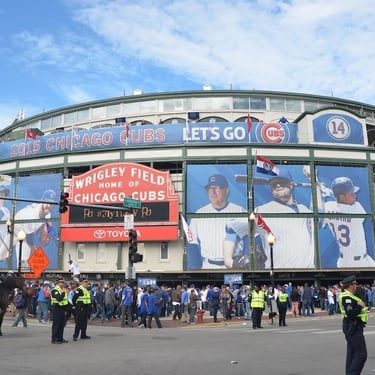
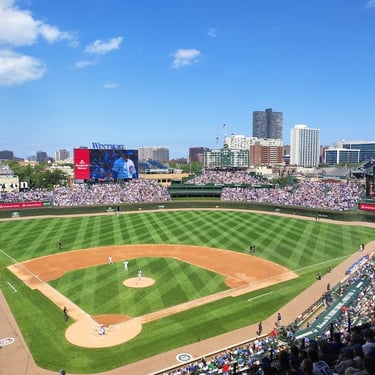
Winters were brutal, but once summer hit, my dad and his friends would take the bus into the Loop and catch the Red Line to go watch the Cubs lose at Wrigley. His mother—my grandmother from the tracks—was a White Sox fan. South Side loyalty, even though her son had clearly defected.
My dad left after Argo High, became a civil engineer, and spent his career with the Federal Highway Administration.
And that’s exactly how he talks about Chicago.
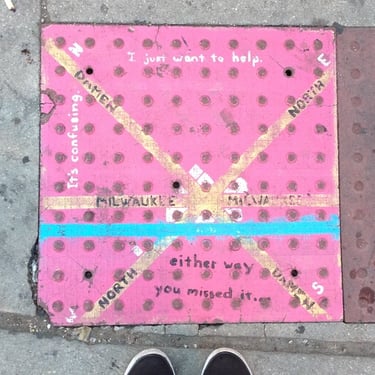
“Eight blocks to a mile. Madison and State are zero-zero. Everything radiates from there. You can tell exactly where you are by looking at the address.”
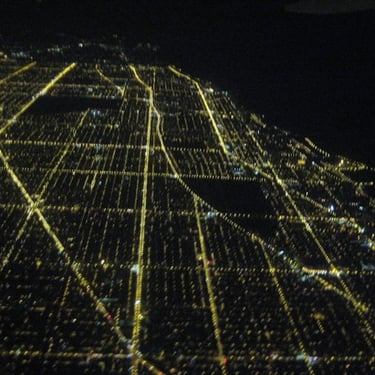
To him, Chicago is geometry—clean, logical, solvable. The higher the number, the farther you are from downtown. No curves and no exceptions.
As a kid, I loved that idea. That a city this massive—the city that held the tallest building in the world for a good chunk of my childhood—could be so simple. And that you could never really get lost if you knew how the numbers worked.
Chicago felt safe that way. A place even my eight-year-old brain could figure out.
But my dad had a sister—my Aunt Barbara—who showed me a different Chicago without meaning to.
The first thing I remember her buying me was a stuffed Chicago bear and a 12-inch vinyl of the Super Bowl shuffle—from the year they won. But within a couple of years, my brother and I started noticing her birthday gifts—”pizza money”—were getting a little more generous.
She was the first one in my family to really travel, too. I remember getting a postcard— addressed to me—from Stockholm once. My brother got one from Tahiti. These places might as well have been beyond Mars, but we didn’t know enough to question how a law office assistant could afford trips like that.
Years later I found out her boss wasn’t just “a lawyer.” He was a mob lawyer. A few years later he murdered his wife. There was a documentary about it.
And suddenly one childhood detail stopped being so innocent: my aunt casually mentioning that part of her job was dropping off “gifts” at police stations.
In Chicago, you learn fast which questions cost more than they’re worth.
So I grew up with two Chicagos. My dad’s Chicago—the grid, the addresses, the confidence of knowing where you are. And my aunt’s Chicago—the backchannels, the quiet routes that don’t show up on a map.
And when I got old enough, I wanted a third one—the one that sounded like a dare.
I wanted the Chicago I heard in rap songs, or learned about studying basketball players. The one that felt dangerous and real and nothing like suburban Virginia.
I wanted to claim it.
And Chicago—the city that does the Super Bowl Shuffle before it wins the game—taught me there was a way to do that without apologizing.
Claim first. Prove later.
***
"I was born in Chicago and have spent my formative years here. I would say the unwritten or unspoken rule in Chicago, there are many. One of them for sure is you typically will not find ketchup in a lot of places that sell Chicago-style hot dogs. Because hot dogs are served usually with tomato spears on them, and you can get them dragged through the garden basically. So ketchup is faux pas."
"Again broad generalization, but I kind of think that's why people get their careers in stand-up and improv theater in Chicago before, like, moving off to New York. Because you can't succeed if you don't sort of, like, know how to make fun of yourself and kind of have the self-awareness to not be a douche."
"The next thing I learned pretty quickly was that you do get judged based on where you live and why. When I first moved here, I lived in a high-rise in the South Loop neighborhood, and I went to a predominantly black Catholic church on the South Side. I remember one time we were doing a service project and everybody was supposed to meet in a location that happened to be closer to where I live. I was like, 'Well I'm not going to come to church and join the bus and transportation. I'll just meet y'all there.' That's when everybody found out where I lived. I didn't think that was a big deal but I could see their faces change, like 'Oh you live in a high-rise' or whatever. It was from church people, from church-going people; it was very bizarre. That, where you live, where are you from, what--figurative speech--what set you rep... It really distinguishes how people look at you initially if they haven't already taken the time to get to know you. That's a very interesting experience for me."
"I think one of the most Chicagoan things we do is, we jog to Lake Michigan. It's like a 10 minute jog from our house and then we will jog, usually we'll go north but sometimes we go south towards the city, towards the Loop. And we get to Museum Terrace and we jump in the water, or just hang out in the water. And then we go and get on Divvy bikes and we just sort of go through all the different neighborhoods on the way home."
"That you don't need a car for transportation. Fuck the car industry."
***
It’s December 1985. Monday Night Football.
The Chicago Bears—undefeated, the last perfect team standing—go down to Miami and lose by two touchdowns.
The very next day they walk into a studio and record “The Super Bowl Shuffle.”
A rap video. In uniform. Full nicknames. Full chest. On camera, on wax—claiming, loudly, that they’re going to win the Super Bowl. Never mind that the playoffs don’t even start for another month.
Pure audacity.
And then they go out and do it. Finish the regular season 15-1, breeze through the NFC playoffs, and dismantle the Patriots in the Super Bowl, 46-10.
That’s Chicago.
People call it the Second City, but nobody in Chicago actually believes that.
And “the Windy City?” That was never really about the weather. It was about hot air—politicians blowing smoke, boosters, a place that’s always been loud about what it is, and what it’s going to be.
Chicago has a particular confidence that refuses to audition and doesn’t ask for permission. It claims first.
The Bears didn’t wait to see if they were good enough. They just said it out loud—and then made it real. Which is probably why that vinyl ended up in my aunt’s Christmas gift, next to the stuffed bear. Chicago in physical form—shrink-wrapped and sealed.
Somehow, as a kid who didn’t live there, that confidence leaked into me anyway.
I was 13 when I first saw Common. Not heard him—saw him.
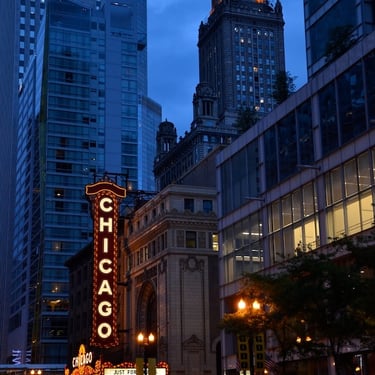
I’d just gotten home from basketball practice and flipped on BET’s Rap City for a minute. I’m about to switch it off and start my homework, but I see this black-and-white shot of the big CHICAGO marquee—the one on the theatre on State Street. And under it, this rapper I’d never heard of, standing there like he owned the city.
At that point, hip-hop geography was simple. You were either East Coast or West Coast. That was the map.
Chicago wasn’t on it.
But I needed it to be. So before I’d even heard a second song, I decided: this guy is it.
A couple of years later, I’m eating lunch with my friends in our high school cafeteria. Plastic tray. Chocolate milk. We’re doing that thing where you argue like the stakes are life and death—best this, best that…best rapper.
Names are flying. Jay-Z, Wu-Tang, Nas, Dre, Pac. The usual pantheon.
And I blurt out: “Common.”
It’s not a chuckle… the entire table laughs.
“Common? Come on, man. He’s not even top fifty.”
And instead of backing down like a normal person, I double down.
“Best lyricist alive. Better bars than Jay, more thoughtful than Biggie…”
I can feel myself getting louder, like volume is evidence. Like if I defend him hard enough, the city behind him becomes mine by association. And the truth is, I did believe it.
Or I wanted to believe it. Or I needed to believe it—because if Common wasn’t elite, then Chicago didn’t have anyone. And if Chicago didn’t have anyone, then what the hell was I claiming?
That lunch argument wasn’t really about music. It was about identity. And this is what ‘claiming’ looked like for me at fourteen: not a tattoo, not even a neighborhood—just memorizing someone else’s Chicago until it felt like mine.
“My style is too developed to be arrested, it’s the freestyle, so now it’s out on parole. They tried to hold my soul in a holding cell so I would sell, I bonded with a break and had enough to make bail…”
I wasn’t just arguing that Common was great. I was arguing that my Chicago—the one I carried around in my head and on my chest—was real enough to fight for.
Because by then, I didn’t want my dad’s Chicago anymore. The grid. The geometry. The comfort of knowing where you are by the numbers.
And I definitely didn’t want my aunt’s Chicago—the quiet one where you learn not to ask questions.
I wanted the Chicago I heard in Common’s songs, and the one I saw in basketball highlights where hoopers became myths—Hoop Dreams, Kevin Garnett, Ronnie Fields.
And Chicago—the morning-after-an-L type of Chicago—taught me a lesson I took straight into adolescence:
You can claim it first.
You can say you’re from somewhere before you’ve earned the right to say it. You can borrow swagger like it’s a jacket and wear it until it fits.
And when you’re a teenager visiting your grandmother for two weeks every summer, there’s another detail that makes this easier: nobody’s watching you that close.
So one day, I decided to take Chicago at its word.
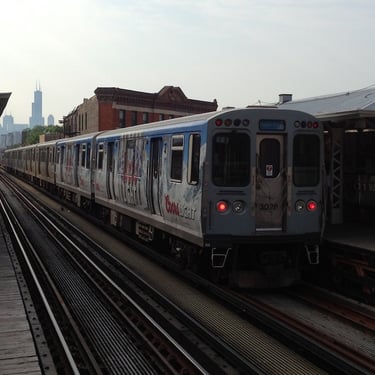
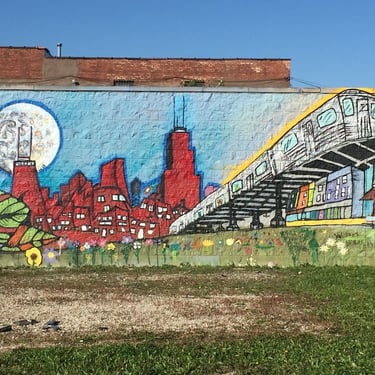
I caught the 62H bus to Midway. Orange Line into the Loop. Downstairs to the Red Line. I’d ridden that transfer before—north to Wrigley with my dad, to watch the Cubs lose on schedule.
But this time, I was alone. And this time, I was heading south.
I was going to see if the map could give me legitimacy.
I didn’t know it yet, but I was about to learn the difference between knowing where you are… and knowing what you’re doing there.
***
"True Chicagoans do not call the city Chi-Town. It makes me cringe when I hear it, and usually when someone says it, I usually ask where they live. Because likely they either live in the suburbs or are newly transplanted to Chicago, or are not from Chicago and don’t really know that yet. But yeah, true Chicagoans typically do not refer to Chicago as Chi-Town or the Chi."
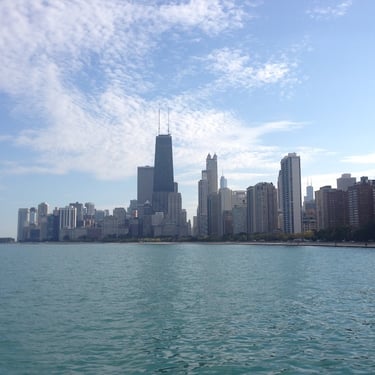
"A very Chicago thing for us, my husband and I, is we like to jog. And the city is filled with parks, and it's probably one of the few places where you have a major metro that's situated on a body of water. Many people may not know, but it looks like an ocean, and the water is clean, and it's clear ,and you can stare out across lake Michigan from Museum Terrace and look at the skyline, and just jump in the water and see 20 feet down."
"Some of the key things I think about Chicago are… I think hands down it is the best place to be in the summer. 'Summertime Chi' is absolutely a real thing. The city really comes alive because we're known for having really cold, brutal weather in the wintertime, and the winter lasts so long. Once the summer hits, you think we have three solid months of being outside and enjoying all of the parks and green space that the city has to offer. You know, Lake Michigan and what Chicagoans call ‘The Beach’ along Lake Michigan. Being on the boat and the waterfront... is such a good vibe to be here. All of the festivals, all the different neighborhoods repping their cultures, their food, their music, the art; it's really an awesome experience to be in Chicago."
"Chicago teaches you how to adapt fast. Weather switches up, people switch up, neighborhoods switch vibes block by block. You learn resilience, minding your business, and loyalty real quick. Also how to layer clothes like your life depends on it…'cause it does."
***
I got off at 79th Street.
A few blocks from Simeon High School—where Ben Wilson, the top high school basketball player in the country, was shot and killed a decade earlier. He was 17. The day before his senior season started.
I’m walking down Vincennes Avenue in the middle of the day, just like Wilson did in his final moments. A body shop that appears closed. An elementary school. A bunch of houses that look… normal. A loud radio on a front stoop. A CTA bus rips past, and right behind it—hidden in its wake—something smaller is pushing bass so hard I feel it in my chest. I never see the car, I just feel the bass, then it’s gone at the corner.
Here’s the thing: I wasn’t scared.
I thought I would be. That was kind of the point—testing myself, pushing up against whatever I believed my limits were. But I felt…fine. Alert, sure. But also kind of proud of myself.
And then, standing there looking at Simeon—empty for summer break—I had a different thought.
Wait.
Why do I want to do this?
Not “am I safe?” or “do I fit in?”
But: why am I here at all?
Because I wasn’t here for a person. I wasn’t meeting anyone. I wasn’t visiting a friend. I wasn’t even really going anywhere.
I was here for a feeling: legitimacy.
I came looking for authenticity like it was something you could pick up and carry home. Like I could ride the L to a neighborhood I only knew through tragedy, walk around for twenty minutes, and come back with proof. A story. Evidence that Chicago was mine in some way that mattered.
But the people living here… they weren’t collecting stories. This wasn’t a test.
It was Tuesday.
Ben Wilson didn’t get to leave. The kids going to Simeon didn’t get to opt out. And me?
I could get back on the train whenever I wanted, back to Summit, back to Virginia, back to a life where this was just a scene.
That was the difference.
So I went back. Red Line to the Loop. Orange Line to Midway. 62H to Summit.
And by the time I walked in the door, I was already editing my day into something flattering. Courage. Exploration. The “real” Chicago.
But the truth was simpler, and worse: I had treated somebody else’s Tuesday like an experience. I’d claimed Chicago. And for the first time, I could feel the difference between claiming a place… and belonging to it.
I didn’t think about that day much afterwards. It became one of those teenage experiments you half-remember, half-forget—because if you examine it too closely, you might not like what you find.
And then, more than two decades later, I learned something that reframed all of it.
I’m watching Judas and the Black Messiah. The Fred Hampton story. Black Panthers. Chicago. And I do what I always do: I pause the movie, open Wikipedia, and don’t come up for air.
Argo.
That’s where my dad grew up.
And it hits me: I’d ridden trains across the south side looking for history—while my dad had been walking through it on his way to school.
Fred Hampton spent his first ten years in Argo, before his family moved a few miles north to Maywood. And then I see another name: Emmett Till. He lived there too. His mother went to Argo High School, same as my dad.
I start doing the math.
My dad: born in 1946.
Till: 1941. Hampton: 1948.
Three kids. Same small, 8-square block orbit. Same time.
Till is famously murdered while visiting relatives in Mississippi at 14. Hampton is killed by Chicago Police in his apartment at 21.
I call my dad. “Did you know you basically grew up with Emmett Till and Fred Hampton?”
He had no idea. Not even a little.
To my dad, Argo was just Argo. Kids in the neighborhood. Baseball. Walking to school. The buses downtown. The way the numbers worked–eight blocks to a mile, Madison and State as zero-zero.
He didn’t know he was walking the same streets, playing in the same ballgames, smelling the same corn syrup in the air on those still afternoons, as two kids who would soon become unavoidable in American history.
Because they weren’t history yet. They weren’t symbols. They were just….there. Kids in the neighborhood. Part of his childhood. Part of Tuesday.
That’s the difference between coordinates and territory.
The grid can tell you where you are. My dad gave me that—the logic, the system, the way to never be lost in Chicago.
But the grid can’t tell you what a place means while you’re inside it. It can’t tell you what it costs. And it definitely can’t tell you what it trains into you—what you carry out of it without realizing.
I rode the 'L' to 79th Street trying to turn geography into identity. Trying to borrow weight. Borrow legitimacy. Borrow a sense of belonging I thought I was owed by association.
My dad had proximity and didn’t even know it was something worth claiming.
He left with the map in his head. Went to college, became a civil engineer, moved to Virginia, and gave me the grid—the logic, the organization, the system that made Chicago make sense.
He didn’t give me the story, because he didn’t know there was one to give.
But Chicago still had one more lesson waiting for him. One more moment it had been holding for longer than he’d been alive.
In 2016, I’d fly halfway around the world just to watch his face when it finally happened.
***
"One thing that I noticed about Chicago—and I could only really understand this when I lived in London—was how much of a city of neighborhoods it is. And you get to appreciate it even more when you're on a bike. So we will tend to have our path that goes and snakes through the loop, goes through the Gold Coast, goes through Old Town, goes through Lincoln Park. Occasionally we'll change up our direction and go check out other neighborhoods, like Pilsen or Bucktown. And so each neighborhood has this character, and you really wouldn't know that unless you really spent a long time in Chicago. So I feel like it takes a long time to get to know the city. It's not downtown. I mean, I think that's where international workers think Chicago is. No, it's like a city of neighborhoods."
"But one thing I'll say is that if you're from here, or if you've lived here for a long time like I have, versus if you're just visiting... your experience isn't going to be the full Chicago experience unless someone that's lived here a long time or is from here is actually showing you around. So If you've never actually gone past Roosevelt Road, for example, you haven't had the Chicago experience. Or if you meet somebody that says not to go past Roosevelt Road that's from here and that lives here, they probably haven't been past Roosevelt Road either. The crazy part is that past south of Roosevelt Road, to be specific, isn't even really considered 'the South Side.' A lot of people have this stigma of it's not safe or there's not as much to do or whatever. These are the same people that have never actually been there or explored the different neighborhoods, cultures, food places, art, and all of that. They're just stuck on their ways. A lot of people are like that. I mean equally so I could say people from the South Side have been like 'I don't go downtown or definitely nowhere North of downtown,' because that's not what they know and that's not their day-to-day. None of this is bad; it's just interesting how segregated the city actually is. How loving of a city I think it is, but how segregated it is."
"You really can't understand the city unless you spend time in each of the neighborhoods and understand that demographic, you know, that ethnic group. That sort of genre of person, right? You know, whether it's like Gen Z Artsy or whether it's like middle-aged lesbian, each neighborhood has that kinda character. It's extremely diverse. Few cities can match it, I think, in its level of diversity. It has pretty much everything, but again, because it lacks the hype I was saying at the beginning, you may not know that. It’s just not as known, it’s not as sexy."
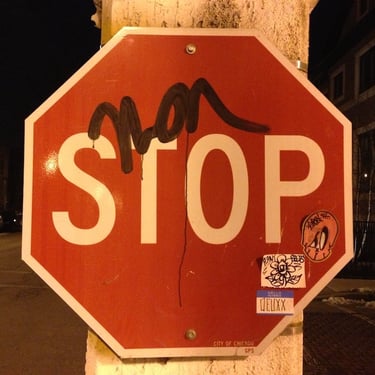
"Street signs. If you park in an area where there's a lot of parking spots available and it's super busy, you probably should check the street signs. Take a walk down to the end of the block. You can still get a ticket even if there's not a sign within a certain 5-car vicinity. Just check both ends, and even if the sign is covered with a bunch of stickers, which has happened to me, where the sign was completely illegible. My car was towed, but I was able to get out of the tow by showing pictures of the sign covered with banned paraphernalia."
"All that available parking under the 'L' is available for a reason…don’t park there!"
***
2016 World Series. Game 7.
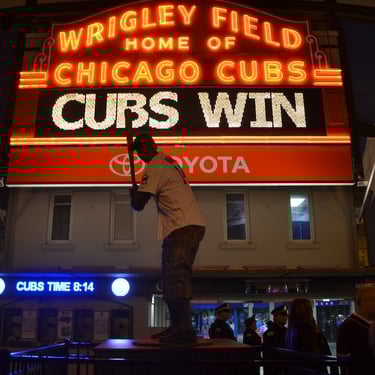
I flew 14 hours from Dubai to watch. And I didn’t fly to Chicago—or even Cleveland, where the game was. I flew home to Virginia, just to sit on a couch next to my dad and watch the Cubs try to do the impossible. One hundred and eight years of waiting, reduced to a few hours of TV and nerves.
When it finally happens—after 5+ hours, and a tenth-inning rain delay—when Kris Bryant fields that grounder, slips a little, and still gets the throw to Rizzo… I don’t remember cheering.
I remember looking at my dad’s face.
It wasn’t a celebration at first. It was disbelief. Like he didn’t trust joy yet. Like he’d spent a lifetime learning how to not get fooled.
That was the tell.
Watching my dad, I realized something I wish I’d known as a teenager.
Chicago doesn’t try to make you tougher. It doesn’t need to. It makes you sharper.
It teaches you how to locate yourself—on the map, in a family, in a history you didn’t ask for—and it teaches you the difference between wanting a place… and being shaped by it.
Because the map is easy. The territory is everything else.
I learned the claiming from the Bears. I learned the earning from my dad. Chicago taught me the difference.
'L' lines. Grid lines. Neighborhood lines. Family lines.
My grandmother got stuck on literal train tracks—freight rails cutting through 63rd Street. She’d been navigating Chicago’s lines for more than eighty years. Timing, shortcuts, which streets to take and which to avoid.
My aunt ran packages to police stations for a mob lawyer. She learned quick which lines you don’t cross–and which ones you don’t ask about.
My dad gave me Chicago as geometry. Numbers, right angles, eight blocks to a mile—a city you can solve if you understand the math.
And me? I rode the 'L' to 79th Street looking for lines I thought would turn me into someone tougher. And here’s what I learned at 79th Street, and again watching my dad the night the Cubs finally won the World Series:
The privilege isn’t only that you can leave. It’s that you can choose what you carry with you.
My dad left Argo and carried the grid like a tool—coordinates, not mythology.
I tried to do the opposite. I wanted to carry the swagger and skip the cost. But if you never get the option, there’s no editing. You carry the address and the freight.
The map tells you where you are.
The territory tells you what you carry.
In 2016, I didn’t fly home to claim Chicago. I flew home to witness, first-hand, my dad’s relationship to it. Someone who earned it the slow way, through time.
I can tell you the address.
My dad can tell you what it meant.
***
"Even having lived here 15 or 16 years now, I think it's pretty easy for people to know that I'm not originally from here because I can live on one part of town, go get my hair done in another, my nails done in another, my doctors over here, over there, wherever. I move around the city so fluidly without fear or question as to why I'm going here for this or there for that. Whereas a lot of people who are originally from here just kind of stay in their own radius and neighborhood of things because that's how they've always experienced life in the city. Again not necessarily good or bad but just different."
"Another unspoken rule In the winter, if you do street park and you shovel a parking spot and put a chair in front, that is your parking spot, and you should not take it. That's just bad juju and karma you're asking for."
"That's one thing the city has taught me. No nonsense, level-headed pragmatism, like, don't think your shit don't stink, because it does, and kind of learning to laugh at yourself. There's almost like a midwestern humor."
"Things that feel like they’re bullshit are. You don't have to engage with anything that feels like bullshit."
***
Chicago. This one stayed with me. If you want to touch your soul a bit, go on YouTube and find the video of the reactions to the Cubs winning the World Series. It’ll light you up.
As always, shout outs and thank yous to the Chicago artists who, as of yet unknowingly, added spice and soul to this episode with the music. It’s a great music city.
And of course the Chicago folks past and present, including my own father, who gave their unique points of view and helped me pull this episode together. Thank you.
We have one more episode in Season 1 of EveryCity Whispers, and that will be my home state of Virginia. I’m already losing sleep thinking about how on earth I’m going to tell an interesting story about Virginia. But I may have an ace or two up my sleeve.
I’ll remind you all again that the vision for EveryCity Whispers is not for me to tell my own stories forever. I want them to be about you. So regardless of where you live, if you have some insight about how your city has shaped you, or any interesting people in your orbit I should talk to me, please do reach out.
If you enjoyed this episode, tell a friend who might like it too. Leave a review, like, comment….let me know you’re out there. I’ll never not be grateful for it.
For the music, all artists & songs – and the Spotify playlist – are on the Chicago episode page at EveryCity Whispers dot com – link in the episode description. I’m posting short clips every day to Instagram, TikTok and YouTube – @ Everycity Whispers for all three. That’s actually been the hardest part, because I really want to focus on making long-form content but I feel like I need to try my hand at short-form to spread the word. I’d rather stay and play here, but I gotta do what I gotta do, so throw me a bone and follow if you use any of those platforms.
And if you want to reach out for any reason, my email is: steven, with a v, @ everycitywhispers. Dot com. (steven@everycitywhispers.com)
Thank you for listening to the Chicago episode of EveryCity Whispers. Up next is VA, and until then…remember: you don’t have to move cities to move yourself forward. Cities don’t shout, they whisper. If you stay curious and listen closely, you’ll hear them.
***
(Scenes from the following movies: The Untouchables, Ferris Bueller's Day Off, The Blues Brothers, Judas and the Black Messiah)
TRANSCRIPT
EVERYCITY WHISPERS
KNOW THE WORLD. KNOW THYSELF.
CONNECT
© 2025-2026. All rights reserved.